If you fall asleep fine but wake at dawn, or you never quite feel rested, the problem might be hanging on your windows. Light is one of the strongest signals your body uses to decide when to sleep and when to wake. A bedroom that never gets truly dark works against you every night. The good news is that this is one of the easier sleep problems to fix.
Why darkness matters for sleep
Light sets your internal clock. It regulates your circadian rhythm and controls melatonin, the hormone that tells your body it is time to rest, so keeping a bedroom dark supports better sleep (Sleep Foundation, "Light and Sleep: Effects on Sleep Quality," retrieved 2026-07-10). Even modest light matters. Streetlights, a bright moon, early sunrises, and the glow of the neighborhood all leak through an untreated window and nudge your body toward waking. Making the room as dark as you comfortably can is a real, physical step toward deeper sleep.
Which treatments create real darkness
Not every shade blocks light the same way, so match the treatment to the goal. Blackout roller shades and room-darkening honeycomb shades are built to block the majority of outside light, which is what a bedroom wants. The Sleep Foundation notes that blackout coverings help create the darker environment that supports sleep (Sleep Foundation, "Light and Sleep," retrieved 2026-07-10). For the darkest possible result, an outside mount or a side channel reduces the thin halo of light that can sneak around the edges of a shade. Our room-darkening options are built around exactly this problem.
Get more from the same window
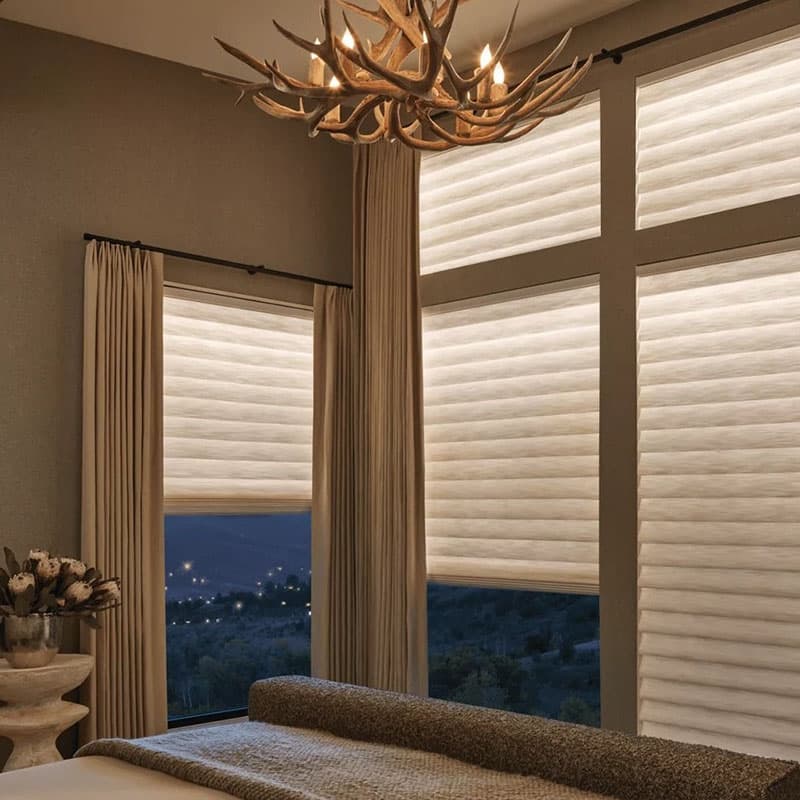
The right bedroom treatment can do a few jobs at once. Honeycomb shades trap a layer of air, so besides darkening the room they add insulation at the window, which helps a bedroom hold a steadier, more comfortable temperature. Layering a blackout shade under drapery panels blocks even more light and softens the room. And if early light or a set wake-up time is the issue, motorized shades can open and close on a schedule, so the room stays dark until you want it bright. You can explore those motorization options if a hands-off routine sounds good.
A darker room is worth trying first
Before you chase bigger fixes for restless sleep, it is worth making the room genuinely dark and seeing what changes. It is a simple, one-time improvement that keeps paying off every night. If you want help choosing blackout or room-darkening treatments for your bedrooms, browse our custom shades or book a free in-home consultation and we will bring samples to you and check how the light falls in each room.
Frequently asked questions
- What window treatments are best for sleep?
- Treatments that make the room dark are best. Blackout roller shades and room-darkening honeycomb shades block most outside light, which supports the darkness your body needs to produce melatonin and stay asleep. For the darkest result, an outside mount or side channels reduce the light that leaks around the edges of a shade.
- Do blackout shades really help you sleep?
- They help by removing a real disruptor. Light regulates your circadian rhythm and melatonin, and the Sleep Foundation notes that a darker bedroom supports better sleep. Blackout shades block the streetlight, early sunrise, and neighborhood glow that leak through a bare window, so your body gets a clearer signal that it is time to rest.
- Are honeycomb shades good for bedrooms?
- Yes, they are a strong bedroom choice. Room-darkening honeycomb shades block most outside light, and their cellular shape traps a layer of air that adds insulation at the window. That means a darker room and a more comfortable, steadier temperature, which both help with sleep.
- Can bedroom shades be automated?
- Yes. Motorized shades can open and close on a schedule or by remote and app. If early light wakes you, or you like the room to brighten at a set time, automation keeps the bedroom dark until you want it light, with no cords to reach.
Sources
About the author
Lucas Campbell · Business Development, Value Blinds & Shutters
Lucas Campbell joined Value Blinds & Shutters full time in 2023 and works with homeowners across Castle Rock and the Front Range. Value Blinds is the only Hunter Douglas showroom for interior window coverings in Castle Rock and an authorized Hunter Douglas dealer since 2003.