Shutters are a buy-once window treatment, so the material you pick matters more than almost any other choice. It sets how the shutters handle sun and humidity, how they feel, how long they look new, and what they cost. Four materials cover most of what you will see: real wood, faux wood, composite, and vinyl. Here is how each one behaves and where it earns its place.
We have fitted all of these in homes around Castle Rock and the Front Range since 2003, and Colorado's dry air and hard, high-altitude sun make the material choice especially worth getting right.
Real wood shutters
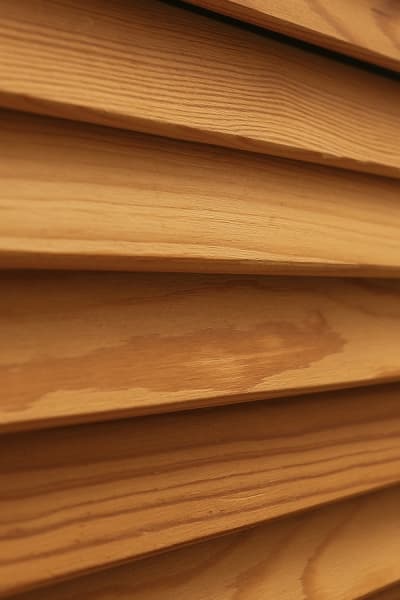
Real wood is the premium choice, and it looks it. The grain has a depth that synthetics imitate but never fully copy, and wood takes stain or paint beautifully, so it is easy to match to trim or furniture. Hunter Douglas builds its hardwood shutters as the Heritance line (Hunter Douglas, "Shutters," retrieved 2026-07-10). Wood is best in living rooms, dining rooms, bedrooms, and studies. It is the one material we steer customers away from in steamy bathrooms, where moisture is a constant.
Faux wood shutters
Faux wood gives you the shutter look at a friendlier price. It resists moisture better than real wood and stays stable, which makes it a sensible all-rounder for most rooms. You give up a little of the natural grain character, but from across a room the difference is small. If you want the plantation-shutter style without the top-tier cost, this is usually where the conversation lands.
Composite shutters
Composite, sometimes called hybrid, is built for durability. It pairs a wood or engineered core with a tougher outer shell, so it shrugs off knocks and humidity. Hunter Douglas sells its composite option as the NewStyle line. Composite is a strong pick for high-traffic and family spaces where shutters get bumped, and for rooms with more moisture than a hardwood shutter would like.
Vinyl and polysatin shutters
Vinyl, and the higher-end polysatin version, is the material to reach for when sun and humidity are the main concern. Hunter Douglas makes its polysatin option as Palm Beach shutters, which are built for heat and humidity and are UV resistant, so they resist warping, cracking, and fading, backed by the Palm Beach Promise (Hunter Douglas, "Palm Beach Polysatin Shutters," retrieved 2026-07-10). That makes it a natural fit for bathrooms, kitchens, and the west- and south-facing windows that take Colorado's strongest sun.
How to choose
The honest rule is to match the material to the room, not to a ranking. Start with two questions. How much moisture and direct sun does the window get, and how much does the natural look of real wood matter to you? Wet or sun-heavy rooms lean synthetic. Formal, dry rooms where the finish is on display lean real wood. Everything in between is a comfortable home for faux wood or composite.
| Material | Moisture & humidity | Look & finish | Relative cost | Best rooms |
|---|---|---|---|---|
| Real wood (Heritance) | Good, keep out of wet rooms | Richest grain, stains and paints well | Highest | Living, dining, bedrooms, studies |
| Faux wood | Very good | Wood look, less natural depth | Mid | Most rooms throughout the home |
| Composite (NewStyle) | Very good | Tough shell, clean finish | Mid | High-traffic and family rooms |
| Vinyl / polysatin (Palm Beach) | Excellent, UV resistant | Won't warp, crack, or fade | Mid to highest | Bathrooms, kitchens, sun-heavy windows |
If you are weighing the whole purchase and not just the material, our plantation shutters buying guide walks through mounting, louver size, and what to expect on install day. For arched or angled windows, shutters can be built to the shape as part of our specialty-shapes work. The easiest way to decide is to see and touch the materials in person, so come by the Castle Rock showroom or book a free in-home consultation and we will bring samples to you. You can also browse our custom shutters to see the finished look.
Frequently asked questions
- What is the best material for shutters?
- There is no single best material. It depends on the room. Real wood looks richest in dry, formal spaces. Vinyl or polysatin, like Hunter Douglas Palm Beach, holds up best in bathrooms, kitchens, and sun-heavy windows because it resists warping and fading. Faux wood and composite are durable, practical picks for most other rooms.
- Are faux wood shutters as good as real wood?
- For most rooms, they are an excellent choice. Faux wood resists moisture better than real wood, stays stable, and costs less. What you trade is a little of the natural grain depth that real hardwood gives you. In a formal room where the finish is on display, real wood still wins. Almost everywhere else, faux wood is hard to beat for the money.
- Which shutter material is best for a bathroom?
- Choose a moisture-resistant material for bathrooms. Vinyl or polysatin shutters such as Hunter Douglas Palm Beach are built for heat and humidity and will not warp or crack in a steamy room. Composite is another solid option. Real wood is the one material we usually keep out of full bathrooms.
- Do shutters fade in the sun?
- It depends on the material. Real wood finishes can change over years of hard, direct sun. Hunter Douglas Palm Beach polysatin shutters are UV resistant and are guaranteed by the Palm Beach Promise not to warp, crack, or fade, which is why they are a common pick for Colorado's sunniest windows.
Sources
- Hunter Douglas, "Shutters" (Heritance, NewStyle lines) (retrieved 2026-07-10)
- Hunter Douglas, "Palm Beach Polysatin Shutters" (UV resistance, Palm Beach Promise) (retrieved 2026-07-10)
About the author
Lucas Campbell · Business Development, Value Blinds & Shutters
Lucas Campbell joined Value Blinds & Shutters full time in 2023 and works with homeowners across Castle Rock and the Front Range. Value Blinds is the only Hunter Douglas showroom for interior window coverings in Castle Rock and an authorized Hunter Douglas dealer since 2003.