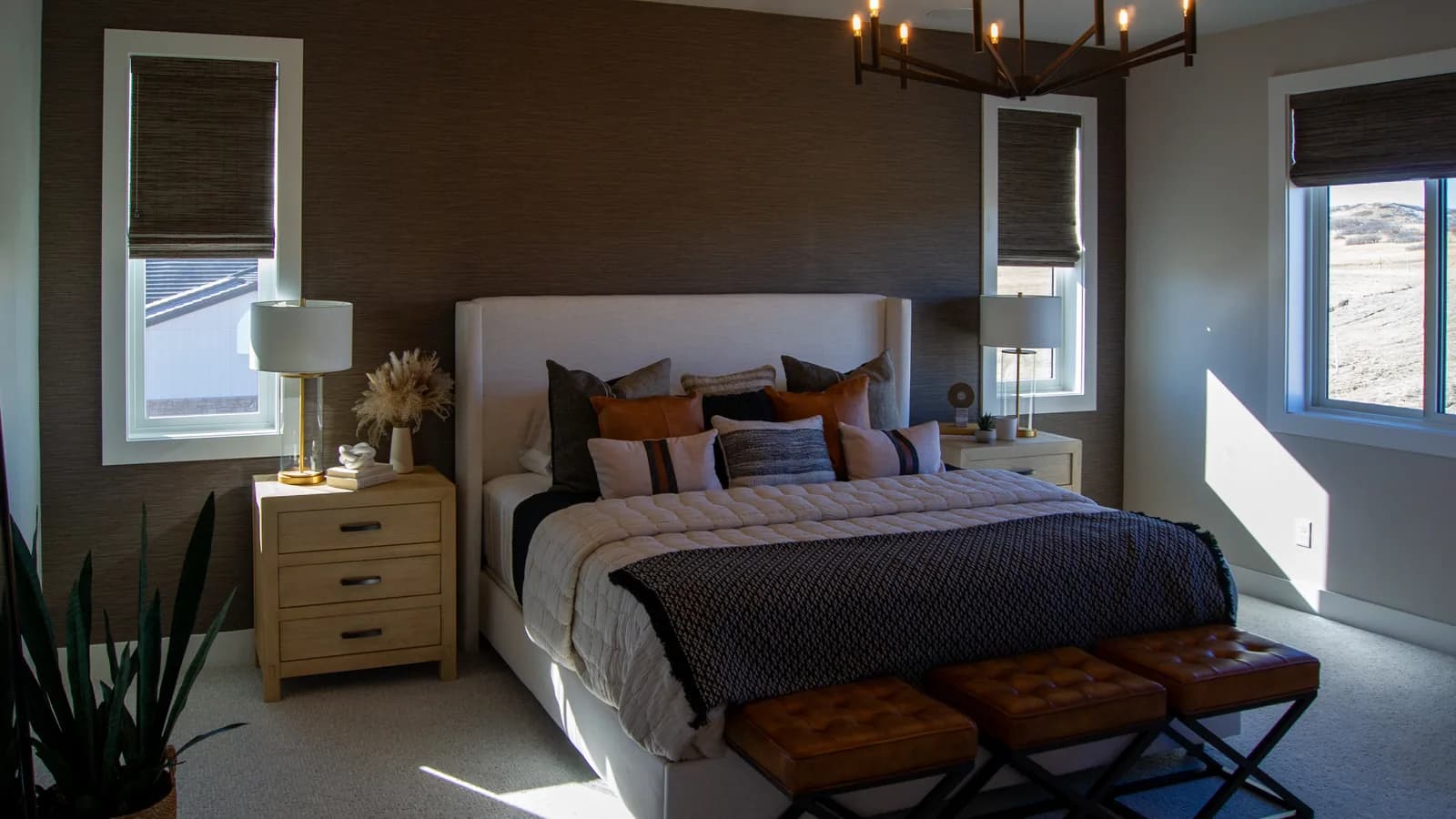
Motorized shades sound like a splurge until you live with the room they change. Still, the first question almost every buyer asks is a fair one: are motorized shades worth it?
The honest answer is that it depends on the room, the windows, and how long you'll own the home. This is a considered upgrade, not an impulse buy. So let's set the sticker price aside and look at what really matters, the long-term cost of owning them.
For the full picture, start with our guide to motorized window coverings.
Key Takeaways
- Motorized shades are worth it for the right rooms, tall or hard-to-reach windows, bedrooms, and big sun-facing walls, and often not worth it for a single easy-to-reach window.
- Judge the decision on lifetime cost of ownership, not sticker price. What you pay depends on window size, fabric, and the system you choose.
- The real downsides are a higher upfront cost, battery upkeep, reliance on a hub and Wi-Fi, occasional service, and planning if you want them hardwired. Each one has a plain fix.
- A careful setup is what makes owners happy long term. One wrote "we don't regret it one single bit" (AppleInsider, 2021).
- A lifetime product warranty plus free in-home service for 5 years changes the math in the buyer's favor.
Are motorized shades worth it?
For the right rooms and the right owner, yes. Motorized shades earn their keep on tall windows, bedrooms, and big sun-facing walls, where daily convenience and light control add up fast. One owner who set theirs up carefully wrote, "we don't regret it one single bit" (AppleInsider, 2021). For a single easy-to-reach window, though, the honest answer is often no.
That split is the whole point. We won't tell you to motorize every window in the house. Some windows you touch once a day, and a cord does the job just fine.
Where motorization pays off is the windows you fight with, or forget, or wish you never had to think about again. A schedule that lowers the shades at bedtime and lifts them with the morning sun does quiet work every single day.
What we tell people in the showroom: the question isn't whether to motorize your house. It's which three or four rooms would actually feel different.
What you actually get with motorized shades
The value shows up in four places: daily convenience, safety, protection, and how the home feels. Cordless motorized shades remove the pull cords that pose a strangulation risk to young kids and pets (U.S. CPSC, corded window covering safety, retrieved 2026-07-22). That safety gain alone matters in a house with little ones.
Convenience is the part people underestimate. Shades that follow a schedule, respond to your voice, or move on a single tap change how a room works. You wake with the light, and the house dims itself at night without a thought.
Then there's protection. Shades that close automatically during peak afternoon sun cut glare and shield floors, rugs, and furniture from UV fading. On a wall of west-facing glass, that's real wear you're saving over the years.
Finally, motorized shades feel built-in, not added-on, especially when they're fit and installed properly. Buyers notice clean, cordless windows that all sit at the same height. It reads as a home that was done right.
What do motorized shades cost, and why?
Motorized shades cost more than manual ones because you're paying for a motor, a power source, a hub, and the programming behind it all. What you actually pay depends on the size of your windows, the fabric you choose, and the system that runs them. The only honest way to know your number is to have your real windows measured.
What moves the number is quality. A better motor runs quieter and holds a straight line across a wall of windows. Better fabric lasts and hangs right. Better integration means it works with the smart home you already have.
And then there's who installs it. A premium shade set up poorly behaves worse than a modest one set up well. So a meaningful share of the cost isn't the shade at all, it's the measuring, mounting, hub placement, and programming that make it just work.
Instead of reading it as one big number, spread it across the years you'll own the home. A shade you never fight with, over a decade in the room you use most, is a small annual cost for a daily gift. That's the lifetime-value math, and it's where "expensive" quietly turns into "worth it."
If you're weighing a premium system against an online kit, we lay out the real differences in our honest look at powerview vs entry-level kits.
When are motorized shades worth it, and when are they not?
Motorized shades are worth it when the window is hard to reach, the room needs daily light control, or you simply never want to touch the covering again. They're usually not worth it on a single, easy, low-traffic window where a manual shade already does the job. Being honest about that split is how you avoid overspending.
Here's the plain version of who should motorize and who can skip it.
| Worth motorizing | Think twice |
|---|---|
| Tall or hard-to-reach windows you can't safely operate | Small, low windows you barely touch |
| Bedrooms, where blackout on a schedule improves sleep | A short-term home or a rental you'll leave soon |
| Big sun-facing walls with glare, heat, and UV fading | A single one-off window a cord already handles |
| Homes with young kids or pets, where cords are a risk | A room you rarely spend time in |
| Whole rooms you'd rather set once and forget | A tight project where manual covers the need |
Notice the pattern. Motorization is worth it where it removes a daily annoyance or a real hazard. It's not worth it where it only adds a feature you'd never actually use.
So the "are motorized blinds worth it" debate has a simple resolution. Motorize the rooms that earn it, and don't motorize the ones that don't. That's the no-pressure recommendation you'll get from us in person, too.
What are the disadvantages of motorized blinds and shades?
The main disadvantages are a higher upfront cost, batteries that need charging or replacing, reliance on a hub, app, and Wi-Fi, the occasional service call, and planning if you want them hardwired in an existing home. None of these should rule motorization out, but each one is real, and you should know how it gets handled before you buy.
Here's the honest list, with how we handle each one.
They cost more upfront
A motorized shade carries a motor, a power source, and a hub that a manual shade doesn't. Across a whole house, that adds up.
Lucas Campbell works with homeowners across Castle Rock and the Front Range. He says that on average, motorizing a window costs about $400 per shade. That's a typical figure we see, not a quote.
How it's handled: motorize only the rooms that earn it, and keep manual shades on the easy windows. In one appointment, we measure, recommend, and give you a price on the spot, so you can see the tradeoff room by room.
Batteries need charging or replacing
Battery-powered PowerView shades need their batteries recharged or replaced from time to time. Taller shades and shades that move more often use more power (Hunter Douglas, PowerView Battery Care & Charging, retrieved 2026-11-09). A shade that starts moving slowly is usually telling you its battery is low.
About 80% of homeowners choose battery power, Lucas says. He finds rechargeable lithium batteries last about 12 to 18 months between charges. AA battery tubes are becoming less popular, because the Colorado sun can make the batteries corrode and leak after about 12 months.
How it's handled: the PowerView app flags which shades have low batteries, so you're not guessing. With a rechargeable battery wand, you can keep a charged spare on hand and swap it in (Hunter Douglas, PowerView Battery Care & Charging, retrieved 2026-11-09). We also offer retrofit kits that change a shade from battery power to a rechargeable lithium tube. In a new build, hardwiring removes the chore entirely.
They rely on a hub, an app, and your Wi-Fi
Schedules, app control, and voice control run through a small hub, called a gateway, that links your shades to your home network. A new router, a new Wi-Fi name, or a hub tucked too far away can drop that connection. A lot of "it stopped working" calls trace back to this layer, not the shade.
How it's handled: the same team that installs your shades places the gateway for a strong signal, links your network and voice platform, and programs your schedules. If something changes later, our guide to what to do when a motorized shade stops working walks through the usual fixes.
A motor can need service
A motorized shade is a system, and any system can hiccup. A manual shade has fewer parts that can act up.
How it's handled: every product we install carries a lifetime product warranty, plus free in-home service for the first 5 years, with parts, labor, and no trip charge. After 5 years, a small trip charge applies, and the lifetime product warranty still stands.
Hardwiring an existing home takes planning
Hardwired shades are the cleanest setup, but the wiring is easiest to run while walls are open. In a finished home, hardwiring can mean cutting into drywall. Hardwired shades also draw on house power, so Hunter Douglas suggests keeping a few backup alkaline battery wands on hand in case the power goes out (Hunter Douglas, PowerView Battery Care & Charging, retrieved 2026-11-09).
How it's handled: in an existing home, battery-powered shades are a genuinely good option and need no new wiring. If you're building, decide before drywall. In a new build where you can run wire, Lucas's advice is to do it. Our guide to motorizing your new build covers the timing.
Should you choose battery, rechargeable, or hardwired power?
Choose battery or rechargeable power for most existing homes, because neither needs new wiring. Choose hardwired power when the walls are open, in a new build or a remodel, so you never charge or replace a battery. Hunter Douglas builds PowerView shades to run on either battery or hardwired power (Hunter Douglas, PowerView Gen 3 Support, retrieved 2026-07-22).
| Power option | Install | Upkeep | Best for |
|---|---|---|---|
| Alkaline battery wand | No wiring needed | Replace the 8 to 12 AA batteries the wand holds, typically about once a year depending on shade size and use | Existing homes and one-off windows |
| Rechargeable battery (wand or internal) | No wiring needed | Recharge only; the lithium-ion batteries never need replacing. A wand can be swapped for a charged spare, while an internal battery charges in place | Existing homes where you'd rather recharge than buy batteries |
| Hardwired | Low-voltage power run to each window, easiest before drywall | No charging; keep a few backup alkaline battery wands for power outages | New builds, remodels, and tall or hard-to-reach windows |
Battery and wand details above come from Hunter Douglas (PowerView Battery Care & Charging, and Battery FAQs for PowerRise and PowerView, retrieved 2026-11-09). We'll help you pick the right power option window by window, not one choice for the whole house.
How does the warranty change the long-term math?
The warranty and service promise are where lifetime cost of ownership tips in your favor. A motorized shade is a system, and any system can hiccup. What protects your investment is what happens next, and that's exactly where a local dealer's coverage does its quiet work over the years you own it.
Every product we install carries a lifetime product warranty. On top of that, you get free in-home service for the first 5 years: parts, labor, and no trip charge. After 5 years, a small trip charge applies, and the lifetime product warranty still stands. That's what "backed for life" means here, the product itself is covered for the long haul.
Fold that into the math and the picture shifts. A shade that acts up isn't a repair bill or a weekend lost to forums, it's a scheduled visit with the people who installed it. If you want to see how that plays out, read what happens when a motorized shade stops working.
Ready to talk it through?
The best way to answer "is it worth it" is to talk through your actual rooms with someone who won't push you. We're the only Hunter Douglas showroom for interior window coverings in Castle Rock, and an authorized Hunter Douglas dealer since 2003.
See how schedules, app, and voice control work on our motorization page. Then come see us at our showroom at 735 Park Street, Unit L, or book a free in-home consultation. In one appointment, we measure, recommend, and give you a price on the spot. We'll tell you which rooms are worth motorizing, and which ones aren't.
Planning a new build? Deciding early lets us hardwire motorization before the drywall goes up. See motorizing your new build.
The honest bottom line
Are motorized shades worth it? For the rooms that earn it, absolutely, and for a random easy window, probably not. The trick is to judge the decision on lifetime cost of ownership rather than the number on the quote. A shade you never think about, in the room you use most, quietly pays you back every day for years.
That's the honest recommendation you'll get from us. We'll help you motorize the rooms that matter, skip the ones that don't, and stand behind the work with a lifetime product warranty and 5 years of free in-home service.
For the full guide to choosing and living with these systems, start with our motorized window coverings.
Frequently asked questions
- Are motorized blinds worth the extra cost?
- For the right rooms, yes. Motorized blinds are worth it on tall windows, bedrooms, and big sun-facing walls, where they remove a daily chore and protect floors from UV. Spread the cost across the years you'll own the home, and a shade you never fight with becomes a small annual price for a daily gift.
- What are the downsides of motorized blinds?
- The honest downsides are a higher upfront cost, batteries that need recharging or replacing, reliance on a hub and Wi-Fi for app and voice control, occasional service, and planning if you want them hardwired. Motorizing only the rooms that earn it, plus a careful setup and local service, handles most of them.
- How much do motorized shades cost?
- It varies with the system, the fabric, and your window count. A single motorized bedroom shade and a whole-home project are very different numbers, which is why an honest, itemized price beats any online estimate. We measure your actual windows and give you a real number in one appointment, no guessing.
- Do motorized shades add value to a home?
- They can help a home feel finished and move-in ready. Cordless, evenly hung shades that operate on a tap or schedule read as a home that was done with care. That said, treat the daily convenience and safety as the main payoff, and any resale appeal as a welcome bonus rather than the reason to buy.
- Are motorized shades hard to maintain?
- No, when they're set up correctly by professionals. Many issues trace to the hub and network layer, not the shade, and Hunter Douglas documents the same setup steps (Hunter Douglas, PowerView Gen 3 Support, retrieved 2026-07-22). Rechargeable lithium batteries last about 12 to 18 months between charges, Lucas Campbell says. AA batteries typically need replacing about once a year. With our own installers and 5-year free in-home service, upkeep is a phone call, not a project.
Sources
- AppleInsider, "Hunter Douglas PowerView shades review" (retrieved 2026-07-22)
- U.S. Consumer Product Safety Commission, "Window Covering Safety" (retrieved 2026-07-22)
- Hunter Douglas, "PowerView Gen 3 Support" (retrieved 2026-07-22)
- Hunter Douglas, "PowerView Battery Care & Charging" (retrieved 2026-11-09)
- Hunter Douglas, "Battery FAQs for PowerRise and PowerView" (retrieved 2026-11-09)
- Lucas Campbell, Value Blinds & Shutters (retrieved 2026-11-09)
About the author
Lucas Campbell · Business Development, Value Blinds & Shutters
Lucas Campbell joined Value Blinds & Shutters full time in 2023 and works with homeowners across Castle Rock and the Front Range. Value Blinds is the only Hunter Douglas showroom for interior window coverings in Castle Rock and an authorized Hunter Douglas dealer since 2003.