You don't have to motorize every window in the house. Some rooms pay you back every single day. Others barely notice the difference.
This is an honest, room-by-room guide to where motorized shades earn their keep, and where a hand-drawn shade is perfectly fine. We'll tell you which windows make the biggest difference, so you spend on the rooms that matter and skip the ones that don't.
Key Takeaways
- Bedrooms, tall or hard-to-reach windows, and bright view-facing rooms get the most out of motorization.
- Windows drive 25-30% of a home's heating and cooling energy, so cellular and solar shades on the right windows do real work (U.S. Department of Energy, retrieved 2026-07-22).
- Small, low, or rarely-used windows usually don't need a motor. Manual is fine.
- Cordless motorized shades remove a real safety hazard in kids' rooms (U.S. CPSC, retrieved 2026-07-22).
Why are bedrooms the top room for motorized shades?
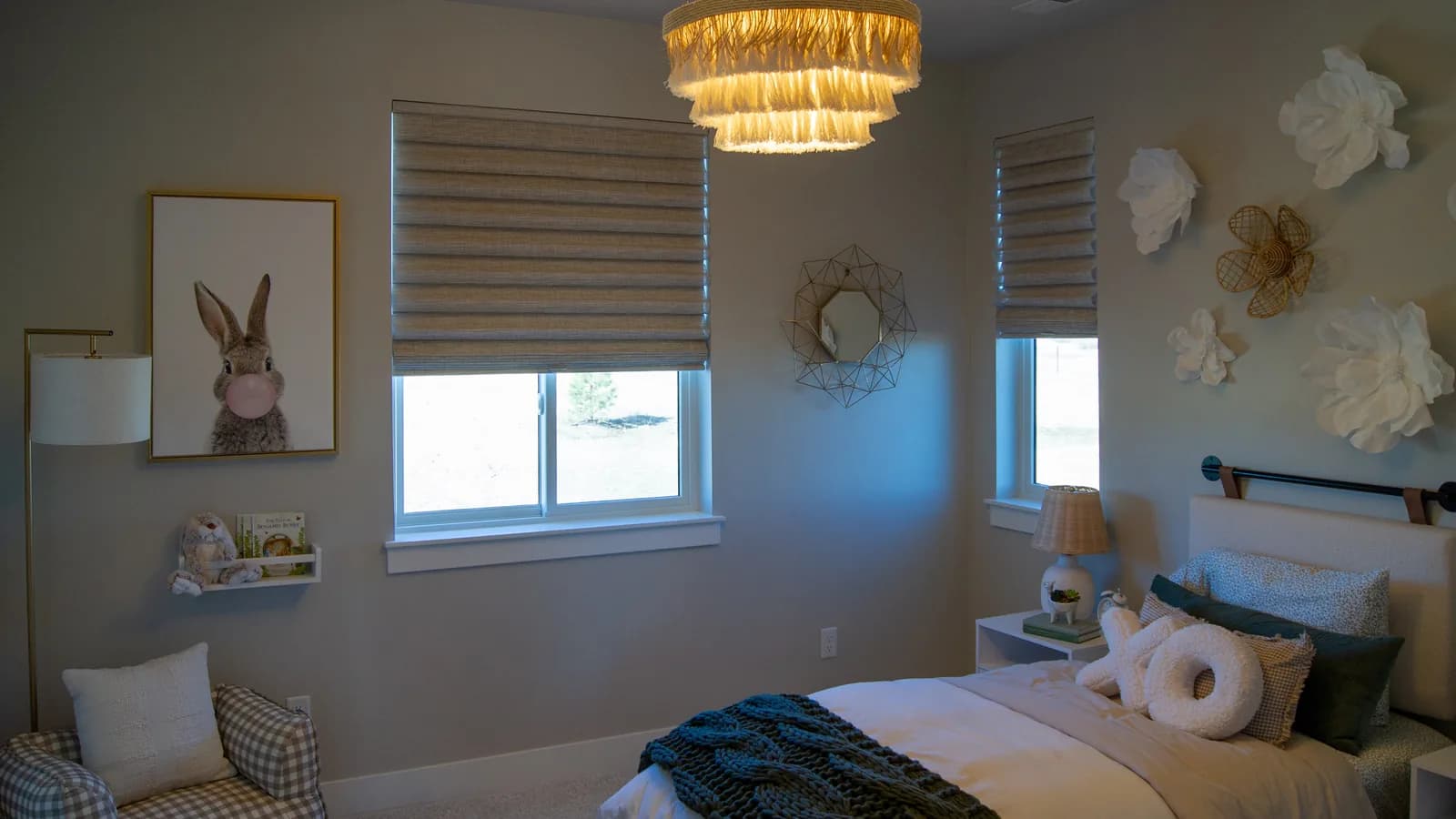
Bedrooms are the easiest room to justify. Light control and sleep are tied together: light exposure at night suppresses melatonin, the hormone that tells your body to rest (Sleep Foundation, retrieved 2026-07-22). A blackout shade on a schedule closes at bedtime and lifts gently at sunrise, no reaching over a nightstand.
That "wake with the light" routine is why motorized shades bedroom setups are the most-loved job we do. You set it once, and mornings feel calmer.
There's a safety angle too. The U.S. Consumer Product Safety Commission lists corded window coverings among the top hidden hazards in homes with young children (U.S. CPSC, retrieved 2026-07-22). Motorized shades are cordless by design, so a nursery or kid's room loses a real risk while gaining a schedule.
For darkness, a blackout roller or a room-darkening cellular shade is the usual pick. Cellular adds insulation on top, which matters on cold Colorado nights.
What about tall windows you can't reach?
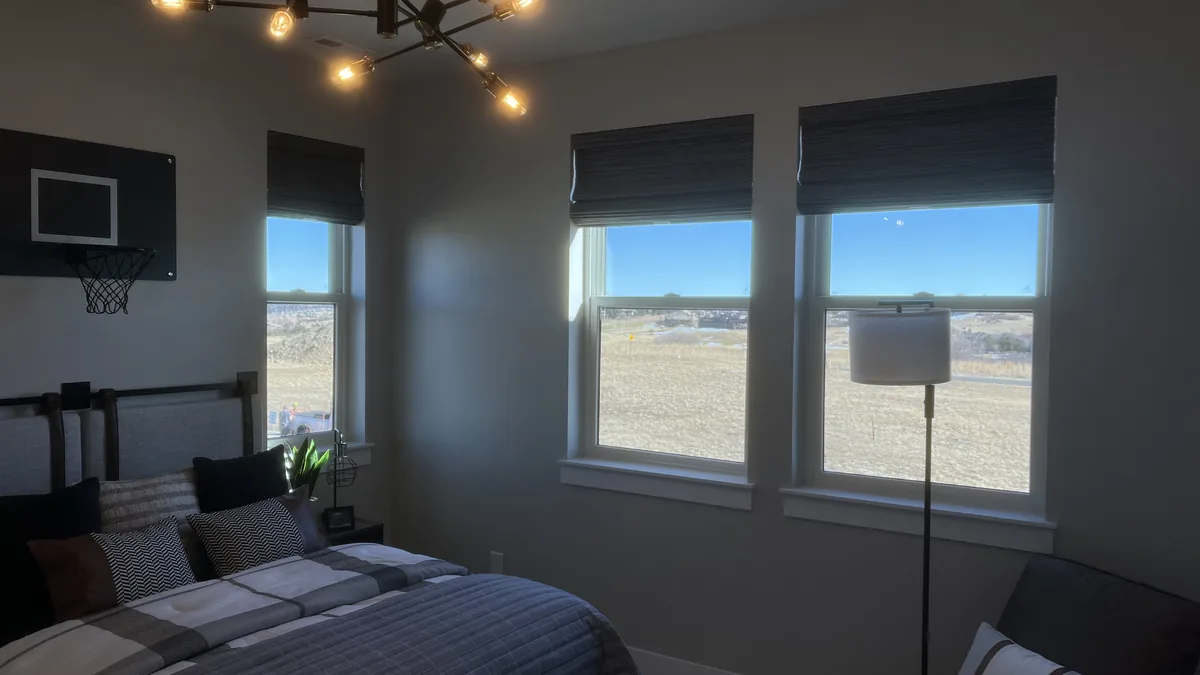
Tall and hard-to-reach windows are where motorization stops being a nice-to-have. Hunter Douglas positions PowerView specifically for high, wide, and out-of-reach windows, the ones a pole or ladder makes miserable (Hunter Douglas, PowerView Motorization, retrieved 2026-07-22). A great room with a two-story window wall is the classic case.
Here's the honest part buyers wish they'd heard sooner. A common regret is skipping motorization on tall or large windows and then living with shades nobody ever adjusts. In our experience, those hard-to-reach windows are the ones homeowners most often wish they'd motorized from the start.
What we see in the field: the tall window a homeowner "figures they'll deal with later" is the exact window they call about first. Manual shades that high get left in one position for years. Motorized shades large windows finally get used, because using them is a tap.
Motorized roller shades handle wide spans cleanly, and a synchronized pair keeps a window wall looking even. For the full picture on how these systems work, see our guide to motorized window coverings.
Which rooms benefit most from solar shades?
Bright, view-facing rooms are the third strong case, and the numbers back it up. Windows are responsible for 25-30% of a home's heating and cooling energy (U.S. Department of Energy, retrieved 2026-07-22). A sun-facing living room or kitchen is where that heat gain, and the glare, actually lives.
Motorized solar roller shades are built for exactly this. They cut heat and glare while keeping the view and the daylight. On a schedule, they lower during the hottest part of the afternoon and open again when the sun moves off the glass.
There's a fading angle too. UVA rays pass straight through ordinary window glass and slowly fade floors, rugs, and furniture (Skin Cancer Foundation, retrieved 2026-07-22). A solar shade that closes automatically protects a room you're not even in.
From our showroom floor: west- and south-facing rooms are where homeowners tell us the automation "paid for itself" fastest. The shade beats the afternoon sun without anyone remembering to pull it. Curious how premium solar shades compare to entry-level kits? See powerview vs entry-level kits.
Are bathrooms and kitchens worth motorizing?
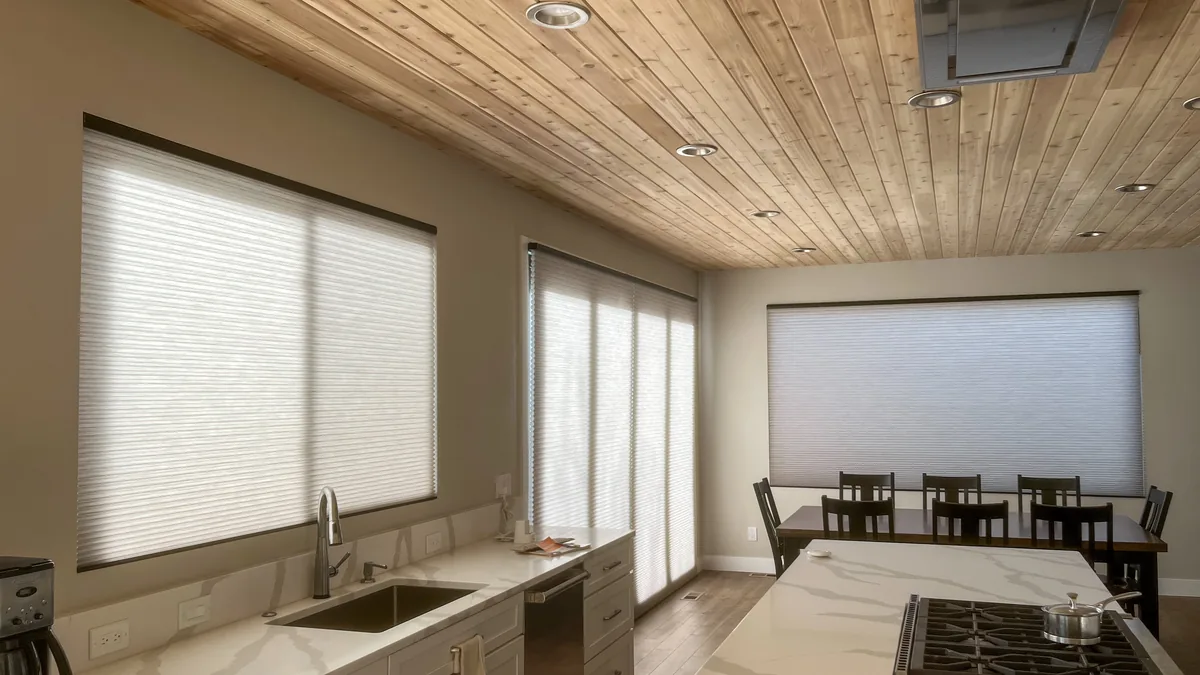
Bathrooms and kitchens are a solid yes, for a practical reason rather than a statistic: your hands are usually full or wet. A shade over a kitchen sink or a tub is awkward to reach, and voice or app control means you never lean across counters or fixtures to adjust it.
For these rooms, choose a moisture-friendly roller or a light-filtering shade that handles humidity well. Privacy on a schedule is the everyday win here.
One caution, honestly stated. A tiny frosted bathroom window you never touch doesn't need a motor. Motorize the window you actually use, like the one over the tub or the wide kitchen slider, and leave the rest simple.
Do home offices need motorized shades?
Home offices benefit more than people expect, because glare is a daily problem there. Screen glare from a sun-facing window forces you to squint or move your monitor. A motorized solar or light-filtering shade on a schedule cuts that glare at the same time each day, so your desk stays usable from morning to afternoon.
The reliability matters when a shade is part of your workday. One owner who set up their system carefully called the shades "rock-solid, and reliable" (AppleInsider, retrieved 2026-07-22). Set a schedule around your meetings, and the window manages itself.
If you run a smart-home setup, an office is also where voice and app control shine. See what works with what in does powerview work with homekit.
Which rooms are not worth motorizing?
Not every window needs a motor, and we'll say so plainly. Small, low, or rarely-used windows are usually fine with a manual shade. A basement window, a closet, a laundry room, or a low window you pass and adjust by hand: none of these earn the upgrade.
The test is simple. Ask how often you'd actually change the shade, and whether the window is easy to reach. Frequent use plus hard-to-reach equals motorize. Rare use plus easy-to-reach equals keep it manual.
How we usually plan it: we'd rather you motorize the five windows that matter and skip the ten that don't. In most homes we walk, that means automating the bedrooms, the tall windows, and the sunny rooms first, then deciding the rest with a clear head.
Spending on the right rooms is the honest move. Start where motorization does real work every day, and add more only if a window keeps annoying you.
Room-by-room at a glance
| Room | Best shade type | Why motorize |
|---|---|---|
| Bedroom / nursery | Blackout roller or room-darkening cellular | Sleep on a schedule, cordless safety, wake with the light |
| Great room / tall windows | Motorized roller or cellular | Reach high, wide windows without a ladder or pole |
| Bright, view-facing rooms | Solar roller shades | Cut heat, glare, and UV fading while keeping the view |
| Bathroom / kitchen | Moisture-friendly roller or light-filtering | Hands-free control over sinks, tubs, and counters |
| Home office | Solar or light-filtering roller | Kill screen glare on a set schedule |
| Small / rarely-used / closet | Manual shade | Low use plus easy reach: a motor isn't worth it |
Planning a new home? The best time to decide is before drywall, so shades can be hardwired. See motorizing your new build.
Book a free in-home consultation
The best way to pick the right rooms is to walk them with someone who does this every day. We'll come to your home, look at your windows and how you live, and tell you honestly which rooms are worth motorizing and which aren't.
Every shade we install carries a lifetime product warranty, plus free in-home service for the first 5 years. After 5 years, a small trip charge applies, and the lifetime product warranty still stands.
We're the only Hunter Douglas showroom for interior window coverings in Castle Rock, and an authorized Hunter Douglas dealer since 2003. Come see PowerView move at our showroom at 735 Park Street, or book a free in-home consultation.
The bottom line
Motorized shades aren't an all-or-nothing purchase. The rooms that pay you back are the ones you use hard or can't easily reach: bedrooms for sleep, tall windows in the great room, and bright rooms fighting sun and glare. Motorize those first, and the whole house feels easier.
The rooms to skip are just as important to name. Small, low, rarely-touched windows are fine by hand, and we'll tell you so. Start with the windows that matter, and add from there.
For the full guide to choosing and living with motorized shades, start with our motorized window coverings.
Frequently asked questions
- What is the single best room for motorized shades?
- The bedroom, for most homeowners. Light control drives sleep quality, since light at night suppresses melatonin (Sleep Foundation, retrieved 2026-07-22). A blackout shade that closes at night and opens at sunrise, hands-free and cordless, is the upgrade people notice every day.
- Are motorized shades worth it for large or tall windows?
- Yes, often more than any other window. Tall and hard-to-reach windows get left in one position for years when they're manual. Hunter Douglas positions PowerView for exactly these windows (Hunter Douglas, retrieved 2026-07-22), and skipping them is a common regret.
- Which rooms are not worth motorizing?
- Small, low, or rarely-used windows. Closets, basements, laundry rooms, and low windows you pass and adjust by hand don't need a motor. The test is use plus reach: motorize frequent, hard-to-reach windows, and keep easy, rarely-touched ones manual.
- Do motorized shades help with energy costs?
- They can, on the right windows. Windows drive 25-30% of home heating and cooling energy (U.S. Department of Energy, retrieved 2026-07-22). Cellular shades add insulation, and scheduled solar shades cut afternoon heat gain in sun-facing rooms automatically.
Sources
- U.S. Department of Energy, "Update or Replace Windows" (retrieved 2026-07-22)
- U.S. Consumer Product Safety Commission, "Window Coverings Safety" (retrieved 2026-07-22)
- Sleep Foundation, "The Best Temperature and Setup for Sleep" (retrieved 2026-07-22)
- Skin Cancer Foundation, "Does a Window Protect Against UV Rays?" (retrieved 2026-07-22)
- Hunter Douglas, "PowerView Motorization" (retrieved 2026-07-22)
- AppleInsider, "Hunter Douglas PowerView shades review" (retrieved 2026-07-22)
About the author
Lucas Campbell · Business Development, Value Blinds & Shutters
Lucas Campbell joined Value Blinds & Shutters full time in 2023 and works with homeowners across Castle Rock and the Front Range. Value Blinds is the only Hunter Douglas showroom for interior window coverings in Castle Rock and an authorized Hunter Douglas dealer since 2003.